
Tree Pests • Central Texas
Woolly Aphids: White Fuzz and Sticky Leaves
Cottony patches on a branch can look like fungus. Sometimes they are tiny insects wearing a coat of wax. Before you buy a spray, identify what is there and look at how the tree is doing.
Identification
Look under the fuzz
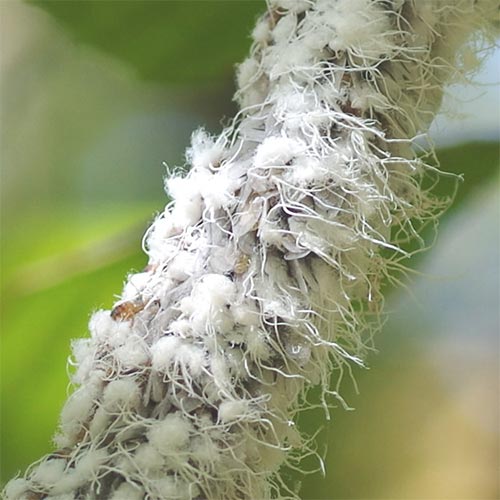
Woolly aphids are sap-feeding insects covered in white, waxy filaments. Check leaf undersides, tender shoots, and bark crevices. On a reachable colony, gently part a little wax and use a hand lens to look for the small insects underneath.
A cottony patch alone is not a diagnosis. Mealybugs, some scales, and adelgids can look similar. On crepe myrtle, compare the signs in the aphid and bark scale guide before treating.
Common hosts
The tree helps identify the insect
Woolly aphids are a group of pests with different hosts. Finding them on one tree does not mean every species in the yard needs treatment.
Hackberry and oak
Hackberries host woolly hackberry aphids. Oaks have their own woolly aphids. Look closely at leaves and new growth rather than assuming every white patch is the same pest.
Ash, elm, and beech
Other woolly aphid species use these trees. Some cause curled or clustered leaves; some alternate between different host plants during their life cycle.
Apple and related plants
Woolly apple aphids can affect apples, crabapples, pyracantha, and cotoneaster. Root infestations and galls can reduce growth, so these deserve closer attention.
The mess underneath
Honeydew first, sooty mold second
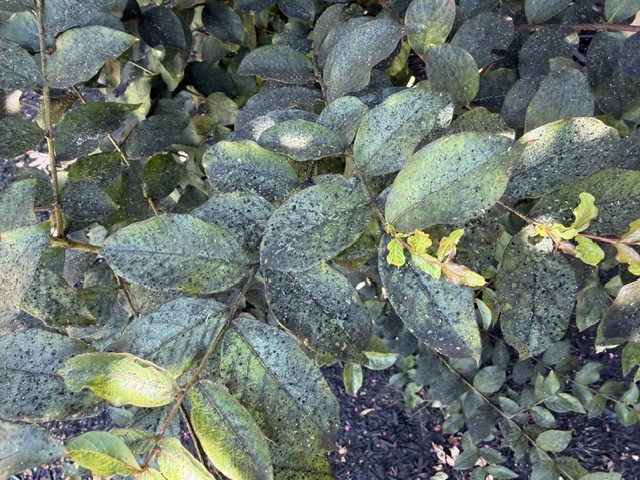
The sticky droplets on leaves, cars, and patio furniture are honeydew, a sugary waste from feeding insects. Ants may visit it. Black sooty mold grows on that residue.
The mold grows on the coating rather than invading the tree's wood. Heavy coverage can shade leaves, but black residue alone does not tell you the tree is dying or identify the insect. A fungicide does not solve the source of the honeydew.
Judge the tree, not just the mess
Most woolly aphid infestations on otherwise healthy shade trees are a nuisance. White wax and sticky furniture can look worse than the feeding injury.
Arrange a closer look if you see persistent leaf distortion, poor growth, early leaf loss, or dying shoots, especially on a young or already stressed tree. Do not assume aphids explain all of the decline. Root problems, drought, and other pests may be involved.
What to do
Start with observation and simple care
Do
- Photograph and recheck. Compare the same shoots and new growth to see whether the problem is expanding.
- Protect natural enemies. Lady beetles, lacewings, and parasitic wasps help limit aphids.
- Use water on reachable colonies. A firm stream can dislodge exposed aphids on small plants. Avoid damaging tender growth; do not climb to reach them.
- Support the tree. Check soil moisture and follow an appropriate plant health care plan.
Avoid
- Spraying just because you see white fuzz. Confirm the insect and decide what problem treatment would solve.
- Broad-spectrum insecticides as a reflex. They can also kill the predators helping you.
- Extra nitrogen to force new growth. Tender growth can favor aphids.
- Household detergent mixtures. They can injure foliage. Use products labeled for the plant and pest when treatment is needed.
A specific problem needs a specific treatment
Treatment may be warranted for a confirmed infestation affecting growth, repeated heavy pressure on a vulnerable tree, or persistent honeydew that makes a patio or walkway difficult to use.
On small, reachable plants, labeled insecticidal soap or horticultural oil may provide partial control if it contacts the insects. Wax, curled leaves, and root-feeding colonies limit coverage. Follow label limits for heat, plant sensitivity, and drought stress.
For a large tree or a persistent problem, discuss options with an arborist and qualified applicator. A systemic is not an automatic next step: suitability depends on the host, pest, product label, and pollinator exposure.
White fuzz and not sure what it is? Let's look
Send a close-up, a leaf underside, and a whole-tree photo, plus when you first noticed it. If the tree is losing growth, the infestation keeps returning, or treatment is out of reach, an on-site assessment is the next step.
This page is educational and does not diagnose a specific tree. Confirm the pest before treating. Pesticide selection and application must follow the product label and site conditions.
Further reading