
Stinging Caterpillars • Central Texas
Puss Caterpillar: Look, Don't Touch
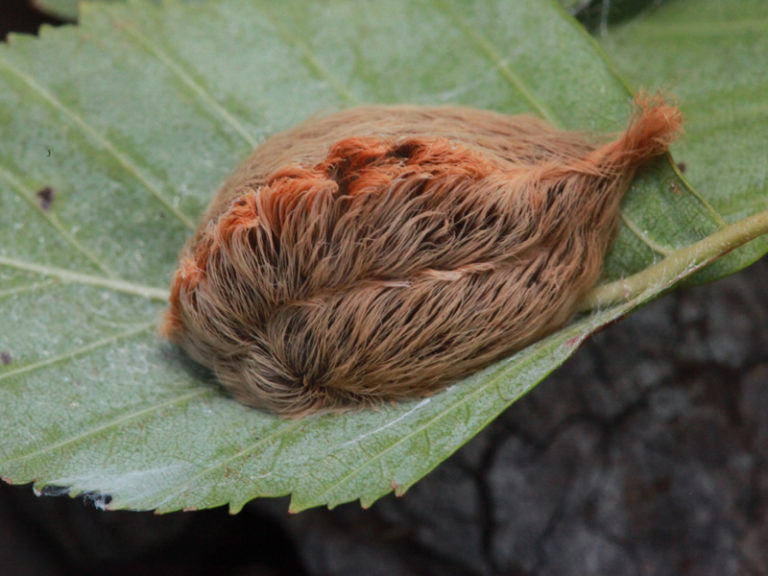
That little tuft of fur on the tree may be an asp, the caterpillar of the southern flannel moth. Its soft-looking coat hides venomous spines. Even a brush against bare skin can cause a severe sting.
Get medical help for the person first
Trouble breathing, collapse, a seizure, or inability to wake the person: call 911 immediately. Do not wait for a photo identification or an arborist reply.
For sting guidance in the U.S., call Poison Control: 1-800-222-1222. Severe or worsening pain, extensive swelling, or other concerning symptoms warrant prompt medical advice.
For skin contact: if the caterpillar is still there, lift it away with a tool, never a bare hand. Do not rub the area. Gently apply adhesive tape and lift it off to remove embedded spines, using a fresh piece each time. Then wash with soap and water. A cold pack wrapped in cloth may help the pain.
For eye contact: rinse with room-temperature water and call Poison Control. Do not use tape near the eye.
First-aid guidance: Poison Control, NC Poison Control, and Merck Manual. Emergency signs: Poison Control first aid.
Identification
The fur hides the hazard
Megalopyge opercularis • Southern flannel moth
An asp looks like a teardrop-shaped tuft of cat fur. Mature caterpillars are about 1 to 1½ inches long. Colors range from yellow or gray to reddish-brown, sometimes mixed. The long hairs conceal the body and the stinging spines underneath.
Do not touch it to confirm an identification. Other fuzzy caterpillars can look similar. Take a photo from a safe distance, and keep children and pets away from the insect.
Contact can cause intense burning or throbbing pain, redness, and swelling. Some people develop nausea or more serious reactions. The apparently soft coat offers no protection to the person touching it.
Where to look
Trees, shrubs, and the surfaces beneath them
Texas A&M AgriLife reports one or two generations a year, with caterpillars often more common in fall. Stay alert whenever they are present, not just during a single season.
Oak, elm, and more
Texas hosts include oak, pecan, elm, hackberry, and shrubs such as dwarf yaupon. Finding one does not mean the tree itself is in poor health.
Low branches and railings
Caterpillars can fall from trees or wander before pupating. Look before reaching into foliage or placing a hand on outdoor furniture or a railing beneath a tree.
Leave cocoons alone
Avoid handling dead caterpillars and cocoons too. Stinging material can still cause a reaction. Keep curious hands away rather than collecting a specimen.
Avoiding contact
A few precautions around the canopy
Do
- Teach children to look without touching. A furry appearance is not a sign that a caterpillar is safe.
- Pause work where you find them. Keep people clear of affected branches, seating, and play areas until the situation is assessed.
- Wear protective clothing while gardening. Gloves and a hat help reduce accidental contact; they are not a reason to handle an asp.
Avoid
- Brushing one off with a hand. Use a tool if it is on someone, then follow sting guidance.
- Shaking branches over people. Caterpillars may drop onto skin or clothing.
- Trying to catch it for identification. A safely taken photo is more useful than another sting.
The contact risk often matters more than the leaf loss
Small numbers usually cause limited feeding damage. Rare outbreaks can strip substantial foliage. The decision also depends on where they are: a caterpillar above an unused corner is a different situation from repeated sightings over a playground.
Ask for an assessment when caterpillars are numerous, repeatedly appear within reach, or are causing significant leaf loss. Avoid blanket spraying for a single sighting. If control is warranted, an applicator should choose a product labeled for the plant, pest, and site.
Texas A&M AgriLife lists Bacillus thuringiensis var. kurstaki (Btk) among the options for large populations. It works best on young caterpillars and also kills non-target butterfly and moth caterpillars. Timing and coverage matter; treatment does not make fallen caterpillars safe to touch.
Asps around a walkway or play area? Let's assess the site
Send a safely taken photo and tell me where you are finding them, how many you have seen, and whether the foliage is being stripped. I can help assess the tree and the landscape management options.
This Field Note is educational. An arborist consultation is for the tree and landscape, not medical treatment. For a sting, contact Poison Control at 1-800-222-1222; for emergency symptoms, call 911. Follow pesticide labels and site-specific professional guidance.