Veinal necrosis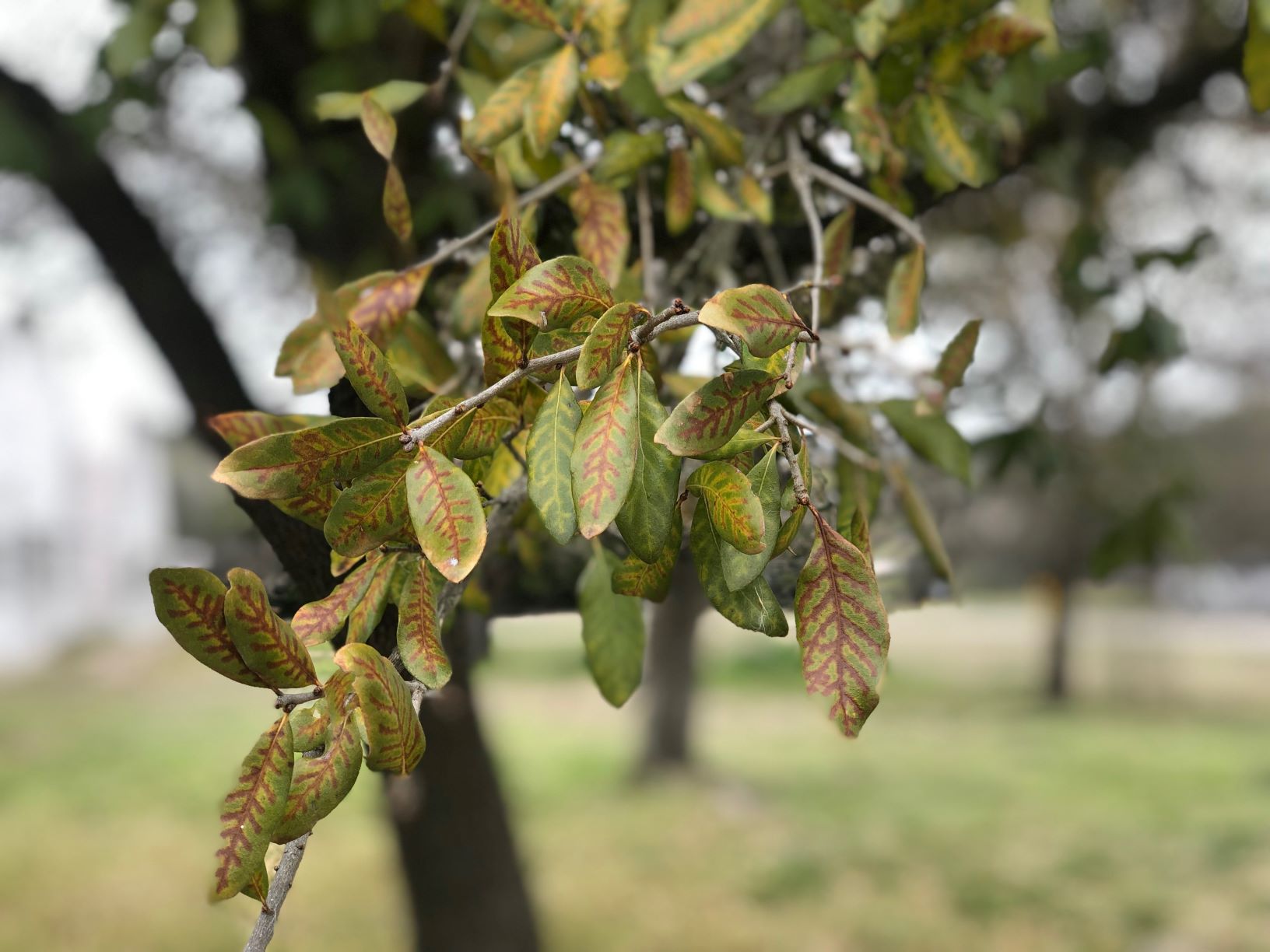
Veins turning yellow then brown
On live oaks, the classic sign is veinal necrosis: the leaf veins yellow and brown while patches stay green. The pattern follows the veins.
Texas Oak Wilt • TOWQ-685
The most destructive tree disease in Central Texas. It moves fast, it kills live oaks, and the window to save the trees around it is short. Here is how to recognize it and what to do.
What it is
Oak wilt is caused by the fungus Bretziella fagacearum. It invades the water-conducting vessels of the tree, which the oak then plugs in self-defense. Starved of water, the canopy browns and dies.
Live oaks are hit hardest because they grow in interconnected groves and share root systems, so the disease races from tree to tree underground. Red oaks (Spanish, Shumard, blackjack) die fastest and grow the spore mats that start new infection centers.
Bretziella fagacearum (formerly Ceratocystis fagacearum)
Warning signs
These signs point toward oak wilt, but they can overlap with other problems. Only laboratory testing confirms it. If you see them, the move is an assessment, not a chainsaw.
On live oaks, the classic sign is veinal necrosis: the leaf veins yellow and brown while patches stay green. The pattern follows the veins.
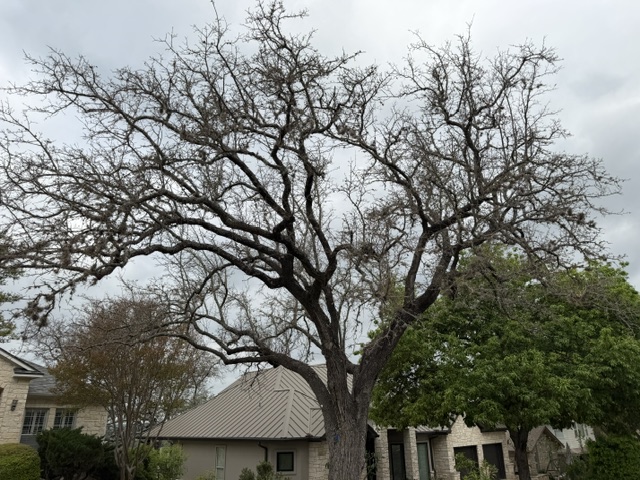
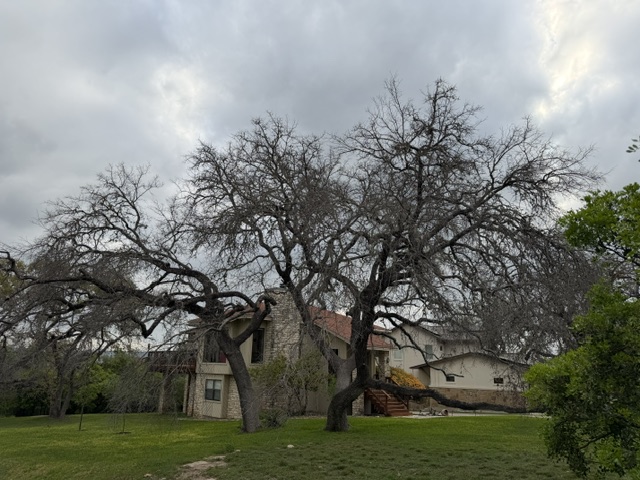
A canopy that thins, browns, and drops leaves quickly, often in spring or summer when it should be full, is a red flag worth investigating now.
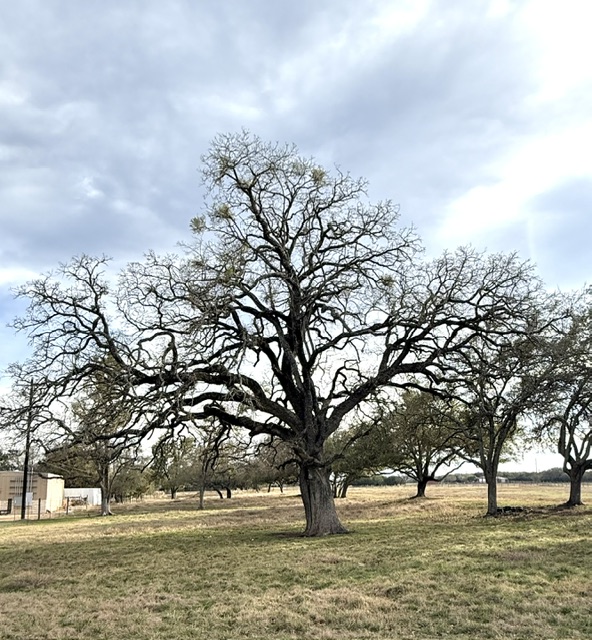
A live oak thinning and dying among its neighbors, like this one on a Central Texas ranch, is the classic oak wilt pattern. Connected roots carry the fungus tree to tree through the stand.
Photos above are from real Central Texas sites. Symptoms shown are consistent with oak wilt. They are not a diagnosis. Confirmation requires an on-site evaluation and laboratory testing.
How it spreads
Understanding both is the whole game, because each one calls for a different response.
Live oaks graft their roots together. The fungus flows through these natural connections from an infected tree to its neighbors, which is why oak wilt spreads in expanding circles. Stopping it means physically severing those roots with a deep trench.
Infected red oaks grow fungal mats under the bark. Sap-feeding nitidulid beetles feed on them, pick up spores, and carry them to fresh wounds on healthy oaks. That is why a fresh, unpainted cut in spring is an open door, and why timing and wound paint matter so much.
Protect your oaks
Most oak wilt spread is preventable. These are the habits that keep it out of your trees.
How I manage it
As a Texas Oak Wilt Qualified arborist, here is how I approach a suspected or confirmed infection center.
A qualified evaluation of the tree, the site, and the pattern of decline.
Samples submitted for laboratory testing, because oak wilt is reportable and worth confirming.
Severing grafted roots with a trench, placed well beyond the symptomatic trees, to stop underground spread.
Propiconazole injected to protect high-value live oaks. It protects the tree but does not stop root spread.
Safe removal and proper handling of infected red oaks so they do not seed new centers.
The sooner it is confirmed, the more trees can be saved. Send me what you are seeing and I will tell you straight whether it needs an urgent, on-site look.
This page is educational and does not diagnose, treat, or certify any tree. Oak wilt is a reportable disease in Texas. A suspected case must be evaluated on site by a qualified arborist and confirmed through certified laboratory diagnostics before treatment or removal decisions are made.