Texas • Arboriculture & Tree Risk

Sean Hager

ISA Certified Arborist delivering credentialed tree risk assessment, oak wilt management, and prescription pruning across Texas. Expertise you can put in writing, and stand behind.

ISA Certified Arborist TX‑5089A Tree Risk Assessment Qualified Texas Oak Wilt Qualified Wildfire Risk Reduction Qualified Prescription Pruning Qualified
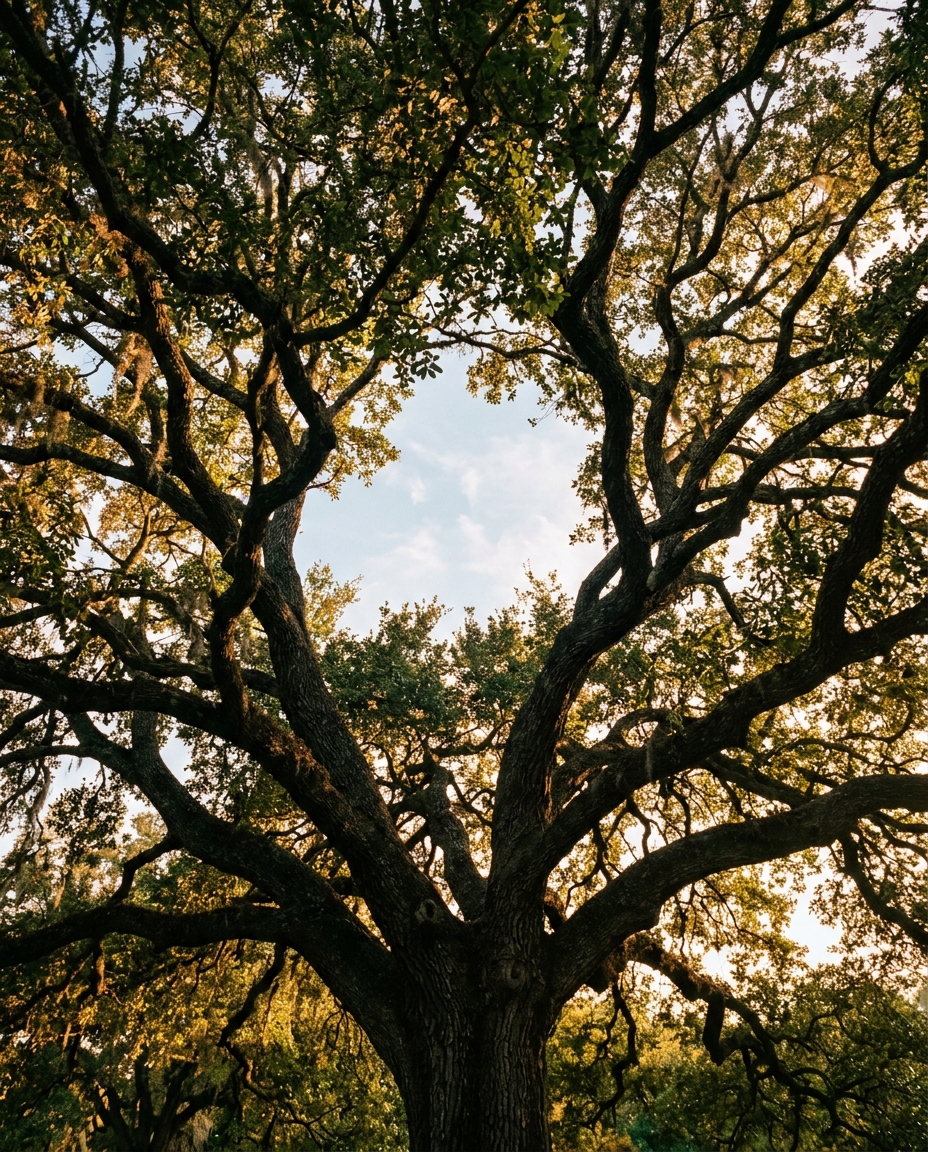
Texas live oak canopy
Hero canopy art
generating
ISA Certified
Scroll

The Credentials

Five ISA qualifications, one accountable name

Anyone can own a chainsaw. These are the elite, independently tested credentials that let me assess risk, sign documentation, and be trusted on the high-liability work.

ISA Certified Arborist official seal ISA Tree Risk Assessment Qualification official seal Texas Oak Wilt Qualified official seal Southern Wildfire Risk Reduction Qualification official seal Prescription Pruning Qualification, ISA, official seal
ISA
Certified Arborist
TX-5089A
TRAQ
ISA Tree Risk Assessment Qualified
Liability & insurance grade
TOWQ
ISA Texas Oak Wilt Qualified
TOWQ-685
WRRQ
ISA Wildfire Risk Reduction Qualified Arborist
TXWWRQ-200
PPQ
ISA Prescription Pruning Qualified
Structural & health pruning

What I Do

Specialized care, not generic tree work

The work where credentials actually matter. Risk, disease, and the decisions that protect property, people, and the canopy.

Defensible, documented evaluations of tree condition and failure potential. The kind insurers, HOAs, and municipalities require before a tree comes down or stays up. You get a clear finding and a recommendation you can act on, or hand to a third party.
Diagnosis, containment, and treatment planning for one of Texas's most destructive tree diseases, with year-round protocol that follows the state-reportable guidance. Suspected oak wilt is escalated to certified diagnostics and lab confirmation, never guessed at.
Read the full oak wilt guide →
Structural and health pruning prescribed to the species and the tree, not a one-size flush cut. Right cuts, right season, right reasons. Young-tree training, clearance, and restoration done to ANSI standard so the tree heals instead of declining.
Defensible-space and fuel-load assessment for properties in the wildland-urban interface, balancing fire safety with a healthy, intact canopy. Practical, prioritized recommendations that reduce risk without clear-cutting what makes the property worth protecting.

What you get

A formal report, not a verbal opinion

Every assessment is documented in a defensible written report: site conditions, a tree-by-tree inventory, individual condition and risk ratings, clear recommendations, and a certification signed under my ISA credentials. The kind of documentation insurers, HOAs, cities, and attorneys actually accept.

  • Executive summary and site conditions
  • Tree inventory with measurements and photos
  • Individual condition and TRAQ risk ratings
  • Species distribution and prioritized recommendations
  • Signed arborist certification

Plant Health Care

Keep trees healthy, not just standing

Most tree calls are reactive: something is already wrong. Plant Health Care is the opposite. It is proactive, year-round care that keeps a tree vigorous, so it resists Texas drought, heat, pests, and disease instead of declining toward the removal list. Think family doctor, not emergency room.

Deep Root Fertilization

Urban trees fight compacted, nutrient-poor soil and lose the competition with turf grass. Deep root fertilization injects a slow-release, balanced feed plus beneficial soil biology under pressure, straight into the root zone below the grass, where the tree actually takes it up.

  • Better color and a denser, fuller canopy
  • Stronger defense against drought, pests, and disease
  • Rebuilds tired, compacted urban soil
  • Best applied in fall or early spring
Tree Growth Regulators

A soil-applied growth regulator (paclobutrazol) tells the tree to slow its top growth and redirect that energy into roots, defense, and stored reserves. For your tree, that means a thicker fine-root system and a tougher, more resilient tree. One application lasts about three years.

  • Markedly better drought and heat tolerance
  • Denser foliage and improved leaf color
  • Fewer pest and disease problems
  • Less frequent pruning, ideal for stressed or mature trees

From the field

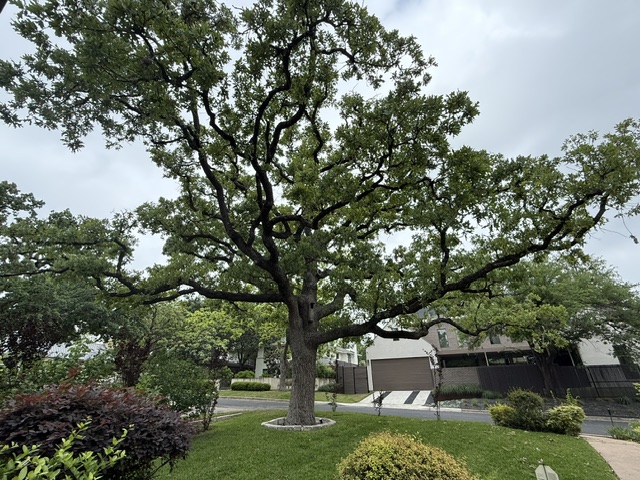
A healthy post oak with a full green canopy after a growth regulator treatment following nearby construction
Post oak holding a full, healthy canopy after a tree growth regulator treatment, applied to carry it through the stress of nearby construction.
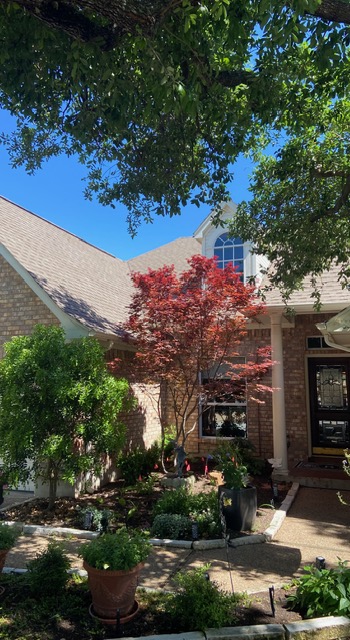
A vibrant Japanese maple thriving in a managed landscape
Japanese maple kept vigorous and richly colored under an ongoing plant health care program.

Plant Health Care also covers soil decompaction and biology, integrated pest management, chlorosis correction, and annual monitoring. Every program is built for the specific tree, species, and site, by a credentialed arborist.

Central Texas Permitting

Tree permitting, surveys, and development review

I handle tree permits and development review across all of Central Texas, including Austin, Round Rock, Georgetown, Cedar Park, Leander, Hutto, Dripping Springs, Bee Cave, and Lakeway. Every city has its own tree ordinance, and they are strict. I prepare and manage the full process so your removal, build, or site plan clears the first time.

19"Diameter and up is a Protected Tree that requires a permit to remove or impact.
24"Heritage threshold for high-value species: all Oaks, Pecan, Texas Ash, Bald Cypress.
1 ft / inCritical Root Zone radius per inch of trunk diameter, fenced and protected during construction.

Figures shown are the City of Austin's, the region's most detailed tree code. Other Central Texas cities set their own thresholds, and I handle each one.

Tree Ordinance Review Application (TORA)

Full preparation and management of the TORA process for removing or impacting regulated trees not tied to development, including impacts from utility issues, disease, or other conditions.

Protected Tree permits

Any species 19 inches in diameter or greater is a Protected Tree requiring a permit to remove or impact. I handle the application end to end.

Heritage Tree permits & variances

Heritage removal is extremely difficult and requires a special variance that is rarely granted. I build the case and the documentation to give it the best possible chance.

8 to 18 inch tree review

On private property the City regulates three classes: 8 to 18 inch, Protected, and Heritage. I confirm exactly which class your tree falls in before anything moves.

Dead, Diseased & Imminent Hazard removals

Permit applications to remove a tree that is dead, diseased, or posing imminent danger to people or property.

Residential development tree review

When a residential property with a regulated tree is developed, the tree review runs simultaneously with building plan review and the tree permit accompanies the building permit.

Commercial & Multifamily Site Plan review

I handle the tree review process on multifamily properties and on projects that require a full Site Plan.

Critical Root Zone protection plans

The CRZ is one foot of radius per inch of trunk diameter. Construction activity inside it requires protection fencing installed before work begins and maintained throughout.

Tree surveys & mitigation packages

Developers must submit tree surveys and mitigation strategies. I prepare both to City standards.

Environmental Criteria Manual, Section 3

Tree preservation requirements are detailed in Section 3 of the Environmental Criteria Manual, which guides every preservation spec I write.

Interactive

Tree Risk Self-Check

Answer five quick questions about the tree you're worried about. This is a starting point, not a diagnosis, but it will tell you how soon you should get a qualified set of eyes on it.

Five quick questions

Toggle Yes or No for each.

Awaiting answers

Tell me about the tree

As you answer, I'll gauge how urgent a professional look is, based on the same signals a TRAQ assessment screens for.

Request a Consultation

This self-check is educational and does not assess, diagnose, or certify any tree. Tree risk and tree disease require an on-site evaluation by a qualified arborist. Suspected oak wilt or other reportable conditions should be confirmed through certified diagnostics.

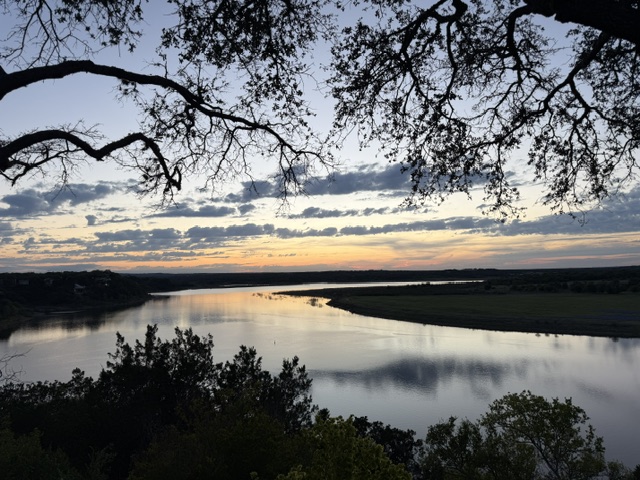
Central Texas sunset over the river, framed by live oak branches
Feature art
generating

About Sean

A Texas arborist who treats the report like it has his name on it, because it does.

I'm an ISA Certified Arborist based in Texas, holding five of the industry's most demanding qualifications, including Tree Risk Assessment (TRAQ) and Texas Oak Wilt. That combination means I can do more than cut a tree: I can evaluate it, document it, and stand behind the recommendation.

Most tree calls don't need a specialist. The ones that do (a leaning oak over a roofline, a suspected disease, an insurance or city requirement) are exactly the ones where the wrong call gets expensive. That's the work I'm built for.

Sean HagerISA Certified Arborist • TX-5089A

Recent Work

Proof, not promises

Credentials matter, and so does the work. Here is a recent job, start to finish.

Time-lapse

A mature red oak, taken down in controlled sections.

Removing a big red oak next to a house is not about brute force. It is sectioned down piece by piece, rigged and lowered so nothing underneath is ever at risk. Start to finish, done right.

  • Sectional removal, rigged and controlled
  • Property and structures protected throughout
  • Cleared down to the trunk safely

More projects added as we document jobs.

Oak Country

This canopy is worth protecting. I help you keep it standing, safely and by the book.

Get In Touch

Have a tree worth a second opinion?

Tell me what you're dealing with. A risk concern, a possible disease, or a job that needs a credentialed sign-off, and I'll tell you straight whether it needs a specialist.

ServingCentral Texas

Opens your email app with the details filled in. No data is stored on this site.